
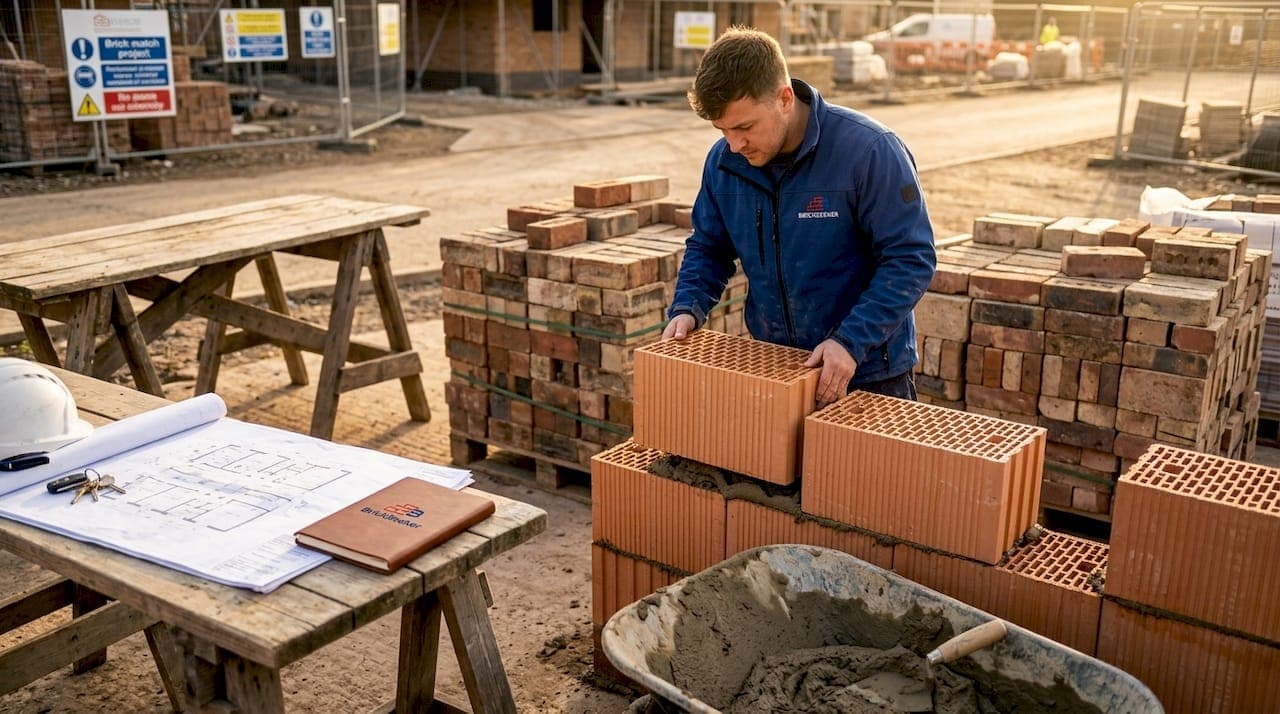
Sustainable bricks are defined as masonry units with independently verified low embodied carbon, produced through processes that reduce resource consumption, extend material life, or incorporate reclaimed and alternative inputs. The UK construction sector is under growing pressure to reduce embodied carbon in buildings, and the choice of brick is one of the most consequential material decisions on any masonry project. Manufacturers including Michelmersh and Forterra now publish Environmental Product Declarations (EPDs) that quantify lifecycle impacts from raw material extraction to end of life, giving specifiers the verified data they need to make genuinely informed choices. The Alliance for Sustainable Building Products (ASBP) has also been instrumental in bringing emerging options to market. Understanding the types of sustainable bricks available in the UK is no longer optional for professionals who want to meet BREEAM targets, satisfy planning conditions, or simply build with a lower carbon footprint.
1. Cellular clay blocks
Cellular clay blocks are the most technically mature sustainable masonry option currently entering the UK market at scale. Unlike standard clay bricks, they are precision manufactured with internal voids and tongue-and-groove profiles that allow thin-bed mortar joints of around 1mm to 3mm. This precision reduces mortar consumption significantly and speeds up laying rates, which has knock-on benefits for programme and labour cost.
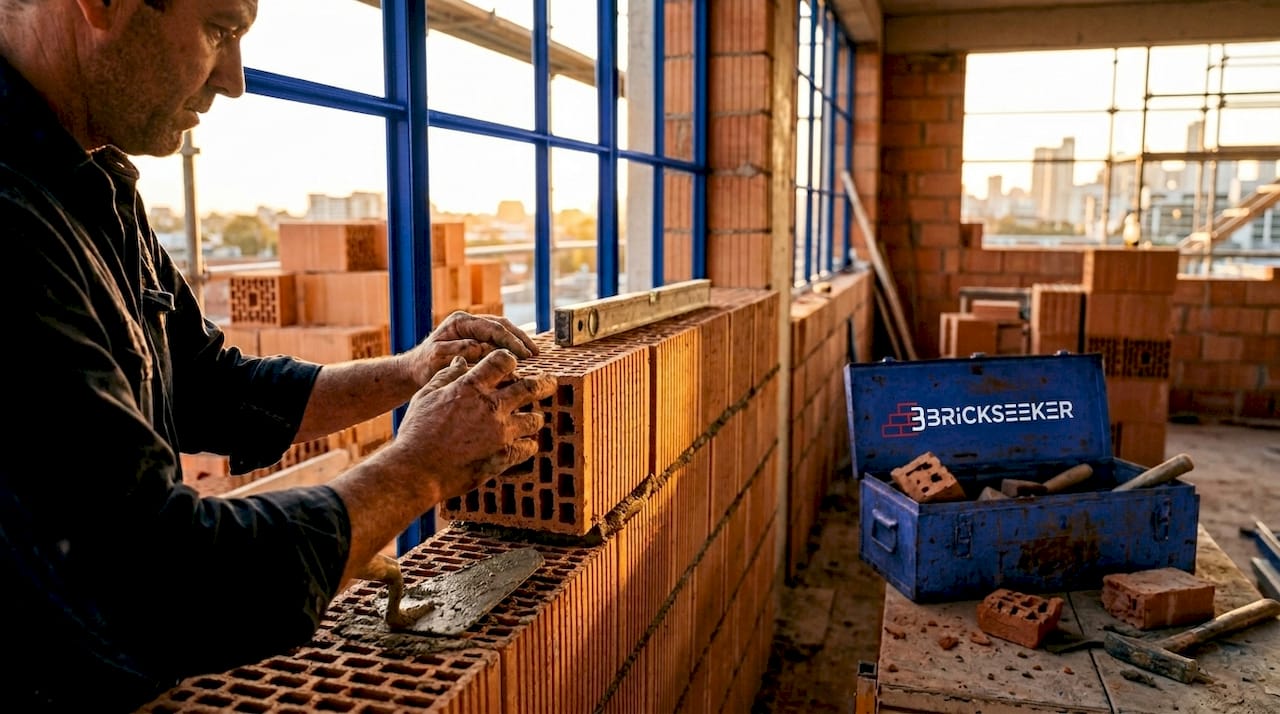
The environmental gains are substantial. Thin-joint clay blocks use approximately 2.7 litres of water per 10 m² of walling, compared to around 50 litres for traditional masonry. That is a reduction of roughly 95%, which matters both for site efficiency and for reducing the energy needed to dry out a structure before internal finishes can begin. Wienerberger's Porotherm system is the most widely recognised product in this category in the UK.
Cellular clay blocks can be used in two configurations:
- Monolithic walls: A single-leaf wall of large-format blocks that provides both structure and thermal performance in one element, reducing the number of trades and materials involved.
- Cavity wall systems: Used as the inner or outer leaf within a conventional cavity construction, where they contribute to thermal mass and reduce overall material weight.
The key design consideration is moisture management. Because these blocks are more porous than dense clay bricks, they require careful detailing at reveals, sills, and parapets. Specifying cellular clay blocks as a combined system, including moisture protection, insulation strategy, and external facade treatment, is the correct approach for UK climate conditions.
Pro Tip: When specifying Porotherm or similar systems, request the manufacturer's full system specification rather than treating the block as a drop-in replacement for standard brickwork. The mortar, ties, and detailing are all part of the performance package.
2. Reclaimed bricks
Reclaimed bricks are the original circular economy material in UK construction, and their environmental credentials are now backed by hard data rather than assumption. EPD data for reclaimed bricks shows a cradle-to-gate global warming potential as low as 20.4 kg CO₂e per tonne. That figure is dramatically lower than new clay bricks, which typically range from 150 to 250 kg CO₂e per tonne depending on kiln type and fuel source.
The concept behind reclaimed bricks is urban mining: treating the existing built environment as a material resource rather than a waste stream. When a Victorian terrace or a 1960s school is demolished, the bricks within it have already absorbed their manufacturing carbon. Reusing them means that carbon is not counted again in a new building's lifecycle assessment.
Practical reuse requires a structured approach:
- Source verification: Identify the demolition site and approximate age of the original structure to understand likely brick type, strength class, and mortar composition.
- Cleaning and grading: Professional cleaning removes old mortar, paint, and contaminants. Grading separates facing-quality units from those suitable only for fill or hardcore.
- Testing: For structural applications, compressive strength testing to BS EN 772-1 is required. For facing use, frost resistance and water absorption tests are advisable.
- Batch consistency: Material variability in reclaimed bricks is the primary practical challenge. Mixed batches from multiple demolition sources will produce inconsistent colour, texture, and performance.
The economics of reclaimed bricks are nuanced. Reuse on the same site or within the same developer's portfolio is the most cost-effective model, avoiding transport and resale margins. When sourcing from a merchant, expect to pay a premium for cleaned, graded, and tested stock. That premium is often justified by the BREEAM credits and embodied carbon savings that verified EPDs can unlock in tender and planning submissions.
Pro Tip: Always ask your reclaimed brick supplier for a written statement of origin and any available test data. A reputable supplier will have this. One who cannot provide it is selling you an unknown quantity, which is a risk on any project where structural or facing performance matters.
3. Lowie bricks and hybrid low-carbon facing bricks
Lowie bricks represent a genuinely new category in UK sustainable masonry. Developed through R&D since 2019 and recognised by the Alliance for Sustainable Building Products, they are neither clay nor concrete in the conventional sense. Instead, they use a hybrid material formulation designed to replicate the appearance of a standard facing brick while substantially reducing the carbon embedded in production.
The key characteristics of Lowie bricks and similar hybrid products are:
- Aesthetic compatibility: They are designed to sit alongside traditional clay brickwork without visual discontinuity, which matters enormously on extensions to existing buildings or in conservation-sensitive areas.
- Reduced kiln dependency: Because they are not fired at the same temperatures as clay bricks, the energy demand per unit is lower, which directly reduces embodied carbon.
- Affordability target: The development brief included cost parity with standard facing bricks, recognising that sustainability credentials alone are insufficient to drive adoption at scale.
- UK market availability: Lowie bricks remain in limited commercial availability as of 2026. They are best suited to specifiers willing to engage directly with the manufacturer and plan procurement lead times accordingly.
The honest limitation is that hybrid bricks like these lack the long performance track record of clay or reclaimed units. Specifiers working on projects with long design lives or demanding durability requirements should weigh this carefully and seek any available technical data on freeze-thaw resistance and long-term weathering behaviour.
4. Biomaterial and reclaimed waste bricks
Beyond clay and hybrid products, a smaller but growing category of eco-friendly brick options uses biomaterials and reclaimed industrial or construction waste as primary inputs. These are not yet mainstream in UK construction, but they represent the direction of travel for the most ambitious low-carbon specifications.
Examples in this category include:
- bioLITH tiles: Made from agricultural and biological waste streams, these units have very low embodied carbon and are designed for cladding and non-structural applications.
- Cork-expanded bricks: Cork is incorporated as a lightweight aggregate, improving thermal performance and reducing the density of the unit.
- Construction waste bricks: Crushed demolition aggregate, glass cullet, and ceramic waste are being trialled as partial or full replacements for virgin raw materials in brick production.
The embodied carbon advantages of these products can be significant, particularly where waste inputs displace energy-intensive virgin materials. The practical challenges are equally significant. Supply chains are fragmented, batch consistency is difficult to guarantee, and most products have not yet accumulated the performance data needed for mainstream structural or facing specification. Regulatory compliance under UK building regulations also requires careful checking, as some products may not yet hold the necessary CE or UKCA marking for structural use.
These materials are best suited to demonstration projects, research builds, or non-structural applications where the specifier has the time and appetite to engage directly with manufacturers and manage the associated procurement complexity.
5. Comparing sustainable brick types for UK projects
Choosing the right green brick type for a UK project depends on three factors: verified embodied carbon data, practical performance requirements, and supply chain reliability. The table below summarises the key options.
| Brick type | Embodied carbon | Best application | Key limitation |
|---|---|---|---|
| Cellular clay blocks | Low to medium, verified by EPD | New-build residential and commercial masonry | Requires full system specification; moisture detailing critical |
| Reclaimed clay bricks | Very low (as low as 20.4 kg CO₂e/t) | Extensions, restoration, heritage projects | Batch variability; testing required for structural use |
| Lowie hybrid bricks | Low, claimed reduction vs clay | Facing brick on new builds and extensions | Limited availability; shorter performance track record |
| Biomaterial and waste bricks | Very low to near zero | Cladding, non-structural, demonstration projects | Supply chain immaturity; regulatory compliance varies |
| Standard clay bricks with EPD | Medium, manufacturer-verified | All masonry applications | Higher embodied carbon than alternatives; EPD quality varies |
The most reliable starting point for any specification is the EPD. EPDs verified to EN 15804 and ISO 14025 provide independently audited lifecycle data that can be used directly in carbon assessments, BREEAM submissions, and tender documentation. A brick without an EPD is a brick you cannot properly account for in a low-carbon specification.
Pro Tip: When sourcing sustainable bricks for a UK project, check whether the EPD covers the specific product and format you are specifying, not just the manufacturer's range in general. EPDs can vary significantly between product lines from the same supplier.
For reclaimed bricks specifically, the UK brick market in 2026 shows growing demand from both residential and commercial sectors, which is tightening supply of good-quality cleaned and graded stock. Plan procurement early and confirm batch sizes before committing to a specification.
Key takeaways
The most effective sustainable brick choice for any UK project is one backed by a verified EPD, matched to the structural and aesthetic requirements of the application, and sourced from a supply chain that can guarantee batch consistency.
| Point | Details |
|---|---|
| EPDs are non-negotiable | Only independently verified EPD data gives you defensible embodied carbon figures for specifications and tenders. |
| Reclaimed bricks lead on carbon | Cradle-to-gate GWP as low as 20.4 kg CO₂e per tonne makes reclaimed bricks the lowest-carbon facing option available. |
| Cellular clay blocks need system thinking | Specify Porotherm and similar products as complete systems, not individual units, to meet UK climate performance requirements. |
| Hybrid and biomaterial bricks are emerging | Lowie bricks and bioLITH tiles offer genuine innovation but require longer procurement lead times and careful performance verification. |
| Source early for reclaimed stock | Demand for quality reclaimed bricks is rising in 2026. Secure batch quantities before finalising your specification. |
What I have learned from specifying sustainable bricks in the UK
The conversation around sustainable bricks has matured considerably in the past few years, and that is genuinely encouraging. When we started seeing EPDs from manufacturers like Michelmersh and Forterra, it shifted the discussion from vague claims about "eco-friendly" products to actual numbers that you can put in a carbon assessment. That shift matters.
What I find frustrating is the gap between ambition and procurement reality. Specifiers write low-carbon brick requirements into tender documents, and then the contractor substitutes a standard clay brick because the sustainable option has a six-week lead time or a minimum order quantity that does not suit a small project. The specification never makes it to site. Closing that gap requires better sourcing infrastructure, not just better products.
Reclaimed bricks are, in my view, the most underutilised sustainable option in the UK right now. The carbon case is clear. The aesthetic case is often stronger than new bricks, particularly on period properties where patina and weathering are assets rather than defects. The barrier is almost entirely logistical: finding cleaned, graded, tested stock in the right quantity and colour. That is a solvable problem, and services that specialise in reclaimed brick sourcing are making it progressively easier.
My advice for 2026 is straightforward. Start with the EPD. If a product does not have one, treat any sustainability claim with scepticism. Then work backwards from your project's performance requirements to identify which brick type fits. Do not let the perfect be the enemy of the good: a well-specified reclaimed brick on a residential extension delivers more genuine carbon benefit than a speculative biomaterial product that never arrives on site.
— Richard
Source sustainable bricks for your UK project with Brickseeker
If you are working on a project that calls for reclaimed, heritage, or sustainably sourced bricks, Brickseeker can help you find the right match without the usual runaround.
We specialise in reclaimed brick sourcing across the UK, working with a network of suppliers to find cleaned, graded stock in the quantities you actually need. Whether you are matching a Victorian terrace, specifying for a BREEAM-rated development, or simply trying to source a small quantity of reclaimed bricks for a garden wall repair, our team will identify your brick and get it to your door. No minimum orders. No trade account needed. Send us a photo or a sample and we will take it from there. Visit brickseeker.co.uk or message us on WhatsApp for a fast response.
FAQ
What makes a brick sustainable in the UK?
A sustainable brick in the UK is one with independently verified low embodied carbon, typically demonstrated through an Environmental Product Declaration (EPD) certified to EN 15804 or ISO 14025. Reclaimed bricks, cellular clay blocks, and hybrid low-carbon products are the main categories currently available.
Are reclaimed bricks suitable for structural use?
Reclaimed bricks can be used structurally, but they must be tested for compressive strength to BS EN 772-1 and assessed for frost resistance and water absorption before specification. Batch consistency from a verified supplier is also required.
What are cellular clay blocks and how do they differ from standard bricks?
Cellular clay blocks are precision-manufactured masonry units with internal voids and tongue-and-groove profiles that use thin-bed mortar joints of 1mm to 3mm. They reduce water use on site by approximately 95% compared to traditional masonry and lower embodied carbon through reduced material volume.
Where can I source sustainable bricks for a UK project?
Reclaimed bricks can be sourced through specialist suppliers like Brickseeker, who offer cleaned and graded stock with verified origin. For cellular clay blocks, Wienerberger's Porotherm system is the most established UK option. Hybrid products like Lowie bricks are available directly from the manufacturer.
Do sustainable bricks cost more than standard clay bricks?
Reclaimed bricks from a reputable supplier typically carry a premium over standard new clay bricks, reflecting cleaning, grading, and testing costs. Cellular clay blocks may have a higher unit cost but can reduce overall project costs through faster laying rates and reduced mortar consumption. Hybrid bricks are designed to achieve cost parity with standard facing bricks.