
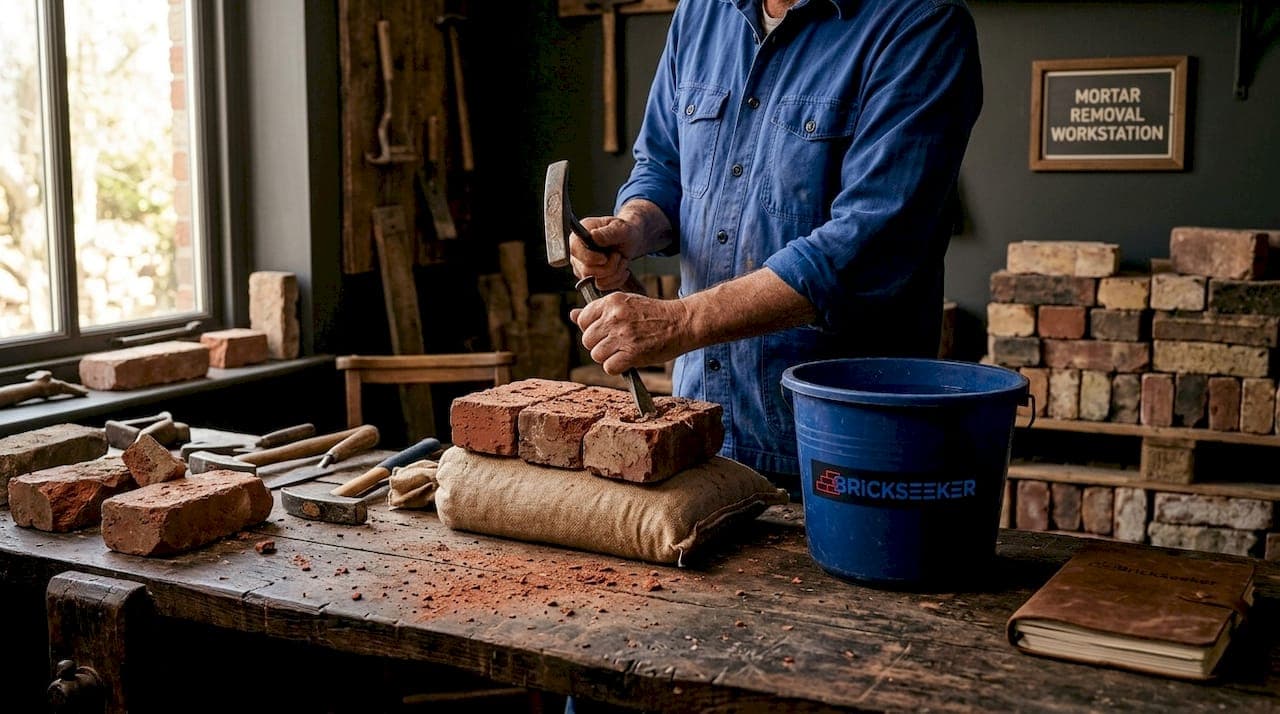
Cleaning reclaimed bricks for reuse is defined as the process of removing old mortar, debris, and surface staining from salvaged brickwork using a combination of manual chiseling, mechanical tumbling, and wire brushing, without stripping the brick's natural patina. The industry term for this practice is reclaimed brick restoration, and it sits at the heart of sustainable construction. Done well, it produces bricks that carry genuine character, bond reliably with new mortar, and arrive on site ready to perform. Done badly, it produces rubble. Understanding how reclaimed bricks are cleaned for reuse means understanding that restraint is as important as thoroughness.
What are the main methods used to clean reclaimed bricks?
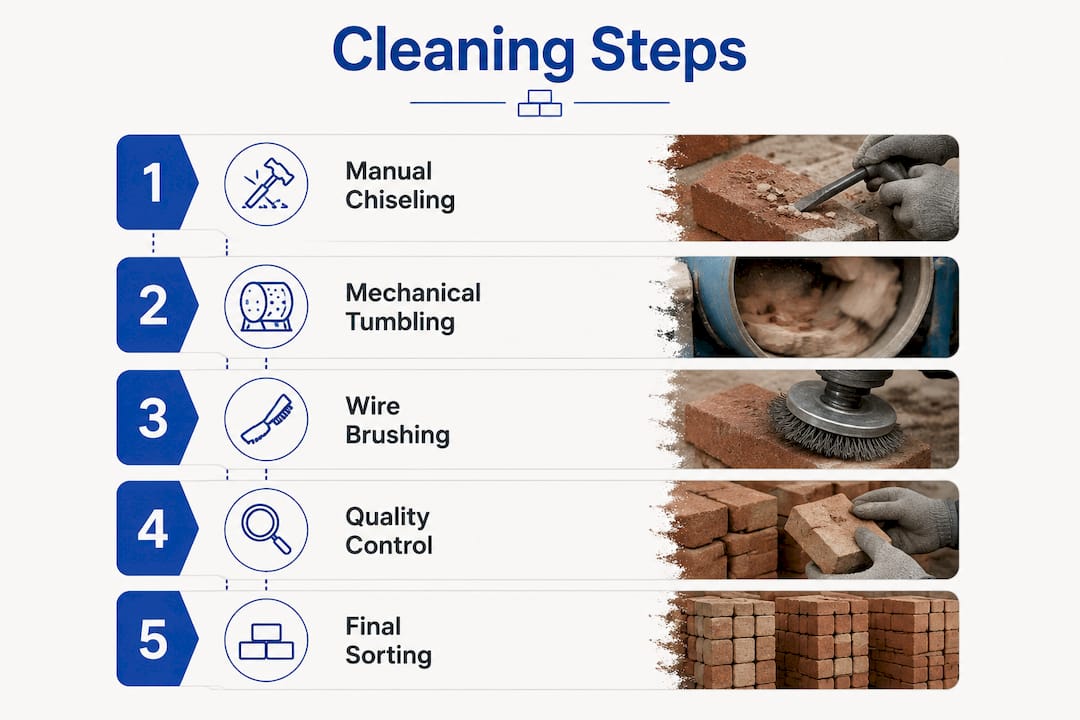
The three primary cleaning techniques are manual chiseling, mechanical tumbling, and wire brushing. Each serves a distinct purpose, and the best results come from combining all three rather than relying on any single method.
Manual chiseling is the foundation of the process. A bricklayer uses a hammer and bolster chisel to chip away the bulk of old lime mortar or cement from each face and bed joint. This is precise, controlled work. It removes the thickest deposits without applying lateral force that could crack the brick body. Hand cleaning averages around four labour-hours per tonne, which makes it slow by industrial standards, but it reduces breakage and preserves surface texture better than any mechanical alternative.
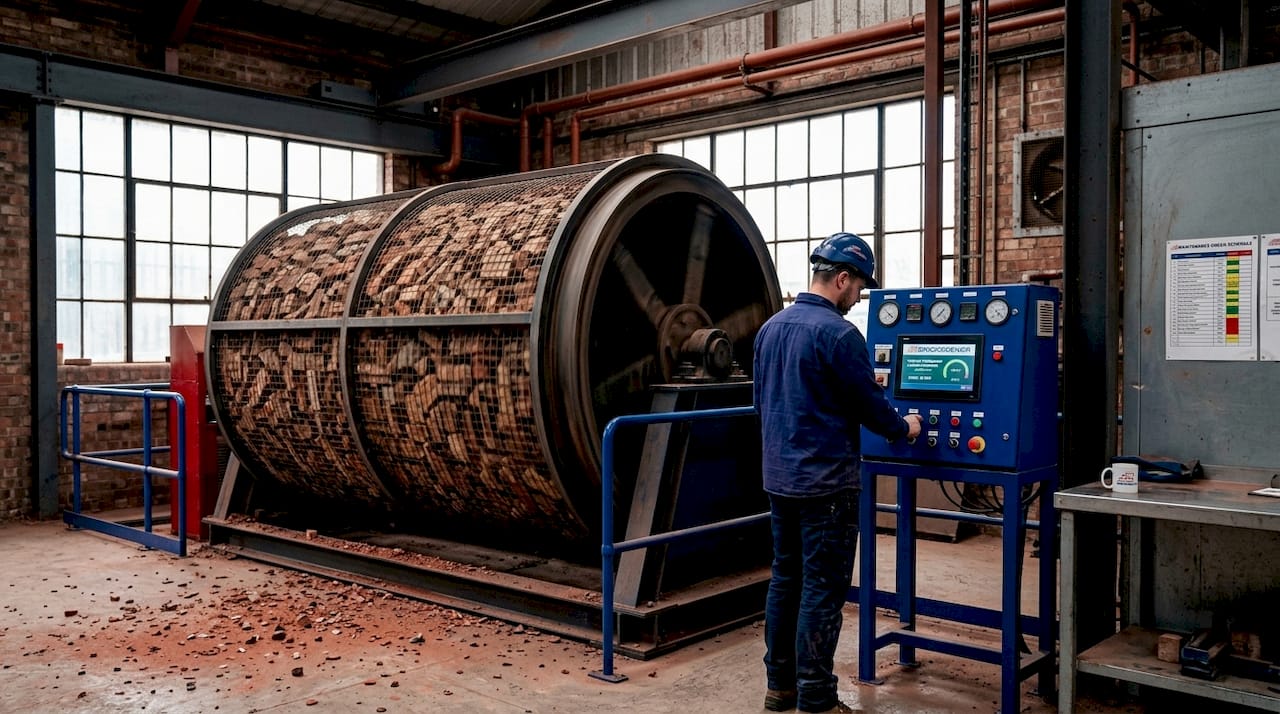
Mechanical tumbling follows for volume processing. Bricks are loaded into a rotating drum that gently abrades residual mortar from all surfaces simultaneously. The critical variable here is calibration. A drum set too aggressively will erode the brick face, round off arrises (the sharp edges that define a brick's profile), and destroy the weathered surface that gives reclaimed material its appeal. Calibrated tumbling balances throughput against preservation, delivering cleaned bricks with intact patina and usable bonding surfaces.
Wire brushing handles what chiseling and tumbling leave behind: thin mortar smears, surface staining, biological growth such as moss or lichen, and loose particles. A stiff wire brush used with water removes these without cutting into the brick face. For more stubborn staining, mild detergents and water with wire brushing are preferred over chemical treatments, which risk etching the surface or bleaching the colour unevenly.
The deliberate avoidance of harsh chemicals is worth emphasising. Acid washes and aggressive stripping agents can remove mortar efficiently, but they also attack the silica matrix of the brick face, leaving a porous, weakened surface that absorbs moisture and stains more readily. Reputable reclaimed brick suppliers rely on calibrated manual and mechanical methods precisely because they produce a better result without the chemical risk.
- Manual chiseling: removes bulk mortar, preserves surface integrity, preferred for fragile or high-value bricks
- Mechanical tumbling: high-volume processing, must be calibrated to avoid over-erosion of arrises and face
- Wire brushing: final surface clean, removes staining and biological growth without chemical risk
- Chemical treatments: generally avoided to protect brick aesthetics and structural surface quality
Pro Tip: If you are cleaning bricks by hand at home, work on a solid surface and hold the brick firmly against a sandbag or rubber mat. Chiseling against a hard floor transfers vibration through the brick body and increases the risk of splitting along the frog.
How does reclaimed brick reuse compare to new production environmentally?
The environmental case for cleaning and reusing reclaimed bricks is not marginal. It is substantial, and the data from life cycle assessment research makes this clear.
Processing reclaimed bricks consumes only 138 kWh per tonne, covering the energy used in cleaning, sorting, and transport. New brick production requires kiln firing above 1,000°C, a process that dwarfs that figure many times over. The implication is direct: every tonne of reclaimed bricks cleaned and returned to use avoids a significant quantity of fossil fuel combustion.
Research from Tampere University quantifies the carbon benefit precisely. Reclaimed bricks offer 86 to 88% lower fossil-based global warming potential (GWP) and 94 to 95% lower total GWP compared to virgin bricks. That reduction comes primarily from avoiding repeated kiln firing, which is the single largest source of embodied carbon in new brick manufacture. For any project targeting BREEAM credits or net-zero embodied carbon targets, this is a material difference.
| Environmental factor | New bricks | Reclaimed bricks |
|---|---|---|
| Processing energy | High (kiln firing above 1,000°C) | Low (138 kWh per tonne for cleaning) |
| Fossil-based GWP | Baseline | 86–88% lower |
| Total GWP | Baseline | 94–95% lower |
| Circular economy contribution | None | Extends material life cycle |
Transport logistics do affect the overall picture. A reclaimed brick sourced locally and cleaned on site carries a much lower transport footprint than one shipped across the country. The circular economy value of reclaimed bricks is maximised when sourcing and cleaning happen within a short supply radius. For UK projects, this means prioritising regional salvage yards and suppliers over distant imports.
For professionals preparing a brick materials schedule for a planning application, the environmental credentials of reclaimed bricks are increasingly relevant. Local authorities and conservation officers respond well to documented evidence of material reuse, particularly in conservation areas.
What are the practical challenges in cleaning reclaimed bricks?
Cleaning reclaimed bricks at scale is physically demanding work, and several practical challenges affect quality, yield, and cost.
Breakage during deconstruction is the first risk. Bricks bonded with hard Portland cement mortar are far more likely to fracture during removal than those set in traditional lime mortar. Lime mortar is softer than the brick itself, so the joint gives way before the brick does. Cement mortar is often harder than the brick face, meaning the chisel force transfers into the brick body. Experienced salvage teams assess the mortar type before beginning deconstruction and adjust their technique accordingly.
Labour intensity is the second challenge. Manual hand cleaning at four labour-hours per tonne is not a figure that scales cheaply. For large projects, this cost must be weighed against the environmental and aesthetic value of the reclaimed material. Mechanised cleaning increases throughput but introduces the risk of over-cleaning, which removes the patina that makes reclaimed bricks worth using in the first place.
- Assess mortar type before deconstruction: lime mortar allows cleaner removal than cement
- Grade bricks during cleaning: separate structurally sound bricks from cracked or spalled ones immediately
- Avoid over-cleaning: a brick stripped of all surface character loses much of its value as a reclaimed material
- Check for salt efflorescence: white crystalline deposits on the surface indicate moisture movement and may recur after installation
Pro Tip: Hold a cleaned brick up to raking light (a low-angle light source held close to the surface) to reveal hairline cracks that are invisible under normal lighting. A cracked brick may pass a visual inspection but will fail under load or freeze-thaw cycling.
Quality control during cleaning is not optional. Sorting bricks by condition, size, and colour as they come off the cleaning line saves significant time during installation and reduces waste. A consistent batch of well-graded reclaimed bricks is far easier to lay than a mixed pile of varying sizes and conditions.
How should reclaimed bricks be prepared after cleaning?
Cleaning removes the mortar and debris. Preparation determines whether the brick is actually ready for use. These are two distinct stages, and conflating them is a common mistake.
-
Inspect for structural soundness. Tap each brick lightly with a metal object. A clear ring indicates a sound brick. A dull thud suggests internal fractures. Discard any brick that fails this test, regardless of how clean its surface appears.
-
Sort by size, colour, and condition. Reclaimed bricks vary more than new bricks in all three dimensions. Grouping them before installation allows the bricklayer to maintain consistent joint widths and achieve a visually coherent result. Colour sorting is particularly important for feature walls or facades where tonal consistency matters.
-
Consider sealing for high-use outdoor applications. Sealing reclaimed brick surfaces is optional, but where bricks will be used as pavers or in exposed garden walls, a breathable sealant improves stain resistance without trapping moisture. The key word is breathable. A non-breathable sealant traps moisture within the brick body, accelerating spalling in frost conditions.
-
Store correctly before installation. Stack cleaned bricks on pallets, off the ground, covered with a breathable sheet. Plastic sheeting traps condensation and encourages biological growth. Bricks stored directly on soil will absorb ground moisture and may develop efflorescence before they are even laid.
-
Check compatibility with the intended mortar. Reclaimed bricks, particularly older handmade ones, are often softer than modern machine-made bricks. They should be laid with a lime-based mortar that matches or is slightly softer than the brick. Using a hard cement mortar with a soft reclaimed brick concentrates stress at the joint and causes the brick face to spall over time.
For heritage projects or period properties, sourcing reclaimed bricks that genuinely match the original is as important as cleaning them correctly. Brickseeker's reclaimed brick sourcing service specialises in exactly this, identifying and supplying period-appropriate material from across the UK.
Key takeaways
Cleaning reclaimed bricks correctly requires calibrated mechanical tumbling, manual chiseling, and careful post-cleaning preparation to preserve both structural integrity and patina.
| Point | Details |
|---|---|
| Cleaning method combination | Manual chiseling, mechanical tumbling, and wire brushing each serve a distinct role in the process. |
| Avoid harsh chemicals | Chemical treatments risk etching the brick face; mild detergents and water are the preferred alternative. |
| Environmental advantage | Reclaimed bricks carry 94–95% lower total GWP than virgin bricks, making reuse a material sustainability gain. |
| Post-cleaning preparation | Inspect, sort, and store correctly before installation to maintain quality and avoid on-site waste. |
| Mortar compatibility | Always match mortar strength to the brick; soft reclaimed bricks require lime-based mortar to prevent spalling. |
The part most guides get wrong about cleaning reclaimed bricks
The standard advice on cleaning reclaimed bricks focuses almost entirely on mortar removal. Get the mortar off, the guides say, and the brick is ready. In my experience, that framing misses the point entirely.
The goal is not a clean brick. The goal is a usable brick that still looks like itself. A reclaimed Victorian stock brick that has been tumbled too aggressively looks like a new brick that someone has roughed up in a car park. The arrises are rounded, the face is uniform, and the patina that took 120 years to develop is gone in twenty minutes. That brick is technically clean. It is also, for most of the projects where reclaimed material genuinely adds value, worthless.
The trade-off between mechanical efficiency and manual care is real, and it matters. Mechanical tumbling is faster and cheaper per tonne. Manual chiseling is slower, more expensive, and produces a better result for high-value or heritage applications. Knowing which approach suits your project is not something a cleaning specification can tell you. It requires someone who has handled enough reclaimed material to recognise the difference between a brick that has been cleaned and a brick that has been ruined.
We see this regularly at Brickseeker when clients bring us bricks that have been over-processed by a salvage yard trying to move volume quickly. The bricks are clean. They are also unrecognisable as the material the client originally wanted. The lesson is to specify cleaning method, not just cleaning outcome, when commissioning reclaimed brick work. And if you are sourcing rather than cleaning, use a supplier who understands the difference between the two.
— Richard
Source reclaimed bricks that are already properly prepared
Finding well-cleaned, correctly graded reclaimed bricks is harder than it sounds. Most salvage yards sell by the pallet with no guarantee of consistency, and the cleaning quality varies enormously. Brickseeker takes a different approach. We source reclaimed bricks from a UK-wide supplier network, match them to your existing brickwork from a photo or physical sample, and supply them in the quantities you actually need. No minimum orders, no trade account required. Whether you are repairing a period wall, extending a Victorian terrace, or sourcing material for a conservation project, our reclaimed brick supply service handles the sourcing, matching, and delivery. Visit brickseeker.co.uk or message us on WhatsApp for a fast response.
FAQ
How are reclaimed bricks cleaned for reuse?
Reclaimed bricks are cleaned using a combination of manual chiseling to remove bulk mortar, mechanical tumbling to abrade residual deposits, and wire brushing for surface staining. Harsh chemical treatments are generally avoided to protect the brick face and preserve patina.
How long does it take to clean reclaimed bricks by hand?
Manual hand cleaning averages approximately four labour-hours per tonne, making it significantly more time-consuming than mechanical methods. The trade-off is lower breakage rates and better preservation of surface character.
Do reclaimed bricks need to be sealed after cleaning?
Sealing is optional and depends on the application. For outdoor pavers or exposed garden walls, a breathable sealant improves stain resistance. Non-breathable sealants should be avoided as they trap moisture and accelerate frost damage.
Are reclaimed bricks more environmentally friendly than new bricks?
Life cycle assessment research shows reclaimed bricks carry 94 to 95% lower total global warming potential than virgin bricks, primarily by avoiding kiln firing above 1,000°C. Processing reclaimed bricks consumes only 138 kWh per tonne compared to the energy demands of new brick production.
What mortar should be used with cleaned reclaimed bricks?
Older and handmade reclaimed bricks are typically softer than modern machine-made bricks and should be laid with a lime-based mortar that is equal to or slightly softer than the brick itself. Using hard cement mortar with soft reclaimed bricks concentrates stress at the joint and causes the brick face to spall over time.